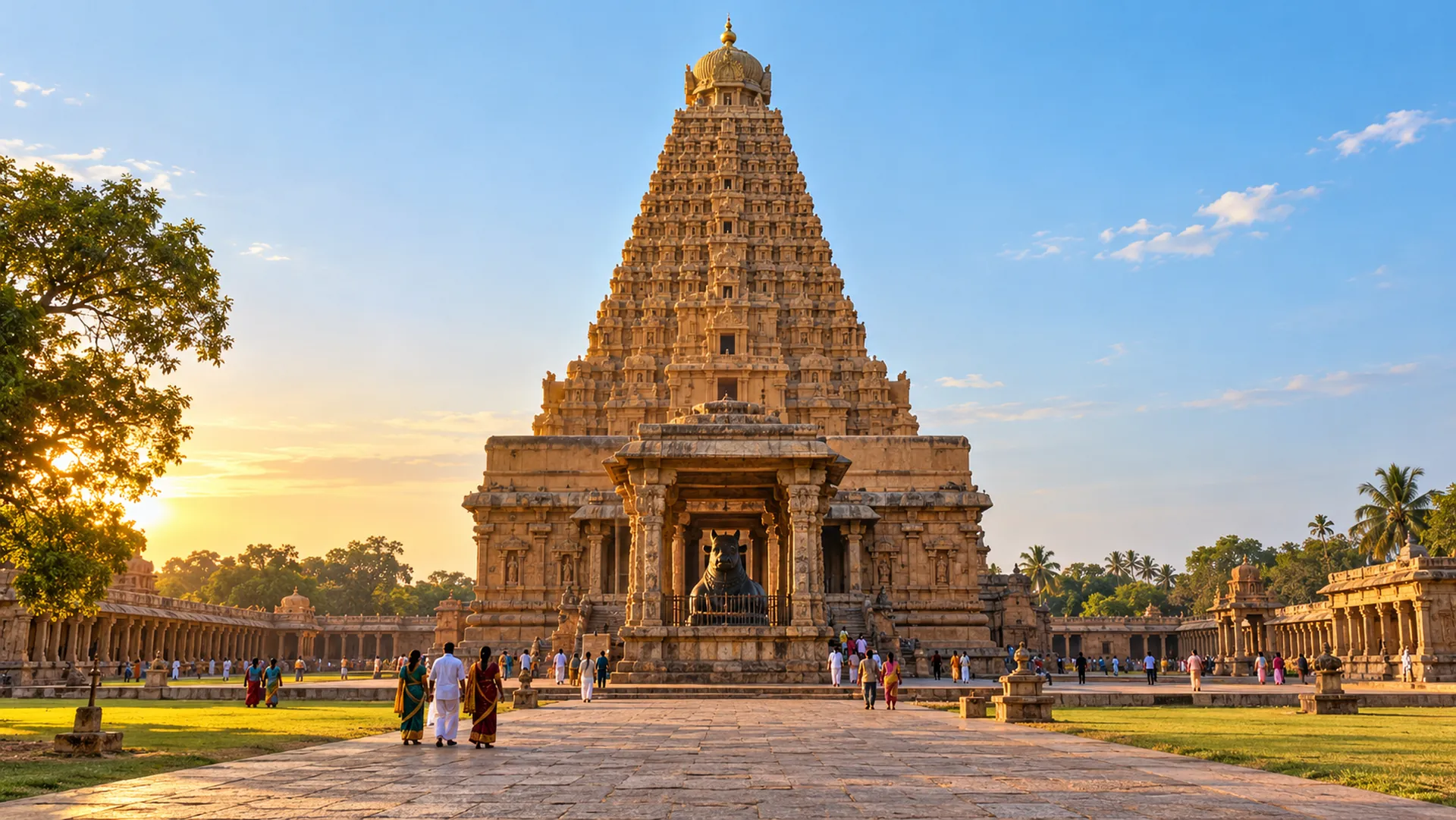
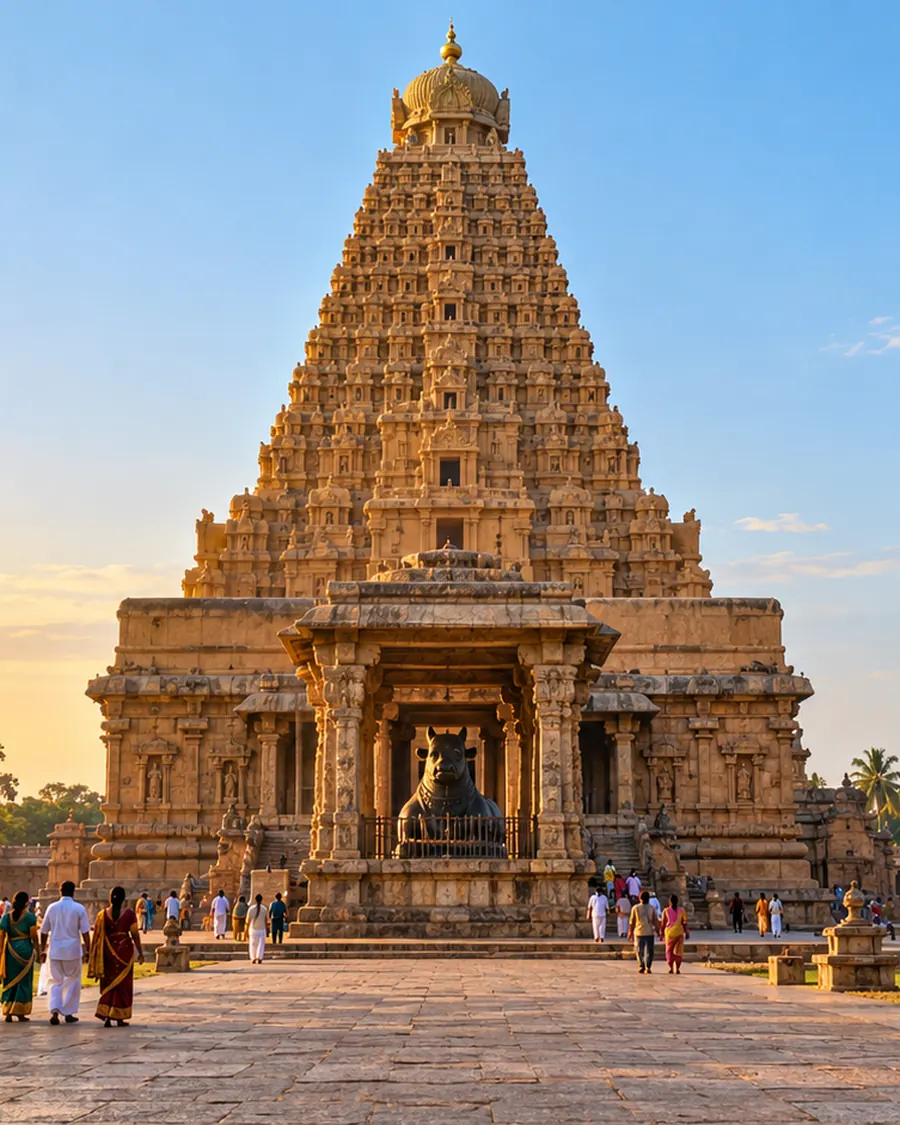
Shiva as Jambukeswarar, with the goddess Akilandeswari
The lingam sits in a spring that never dries. Even the priest at noon dresses as the goddess to worship.
Deity
Shiva as Jambukeswarar, with the goddess Akilandeswari
Where
Thiruvanaikaval திருவானைக்காவல்
Known as
One of the Pancha Bhoota Sthalams: the element of water
Oldest record
Legendary
திருவானைக்காவல்
௧ The legend
The spider and the elephant
In a forest of jambu trees, an elephant worshipped the lingam each day by pouring water from its trunk. A spider worshipped it too, spinning a web over it to keep off falling leaves.
Each thought the other was defiling the god. The elephant tore the web; the spider crept into the elephant’s trunk. Both died in their devotion.
Shiva released the elephant, and the place was named for it: the sacred elephant forest. The spider was reborn as the Chola king Kochengannan, who built his temples raised high, so that no elephant could ever enter.
As the story is told at the temple. Legends vary in the telling.
௨ Across the centuries
Built by many hands, tier upon tier
Legendary
Kochengat Chola
The king of the legend is said to have built the first temple here.
Chola and later
Successive dynasties
Five enclosures are raised around the sanctum, the outermost a great wall over a kilometre long.
௩ What to look for
When you stand inside
௧
The spring in the sanctum
Water seeps up around the lingam through the year.
௨
The low doorway
The sanctum door is about four feet high; everyone bows to enter.
௩
The noon worship
Each midday a priest dressed as Akilandeswari worships Shiva, as the goddess once did.
௪ The temple’s year
The festivals that fill it
சித்திரைChithiraiApr–May
வைகாசிVaikasiMay–Jun
ஆனிAaniJun–Jul
ஆடிAadiJul–Aug
ஆவணிAavaniAug–Sep
புரட்டாசிPurattasiSep–Oct
ஐப்பசிAippasiOct–Nov
கார்த்திகைKarthigaiNov–Dec
மார்கழிMargazhiDec–Jan
தைThaiJan–Feb
மாசிMaasiFeb–Mar
பங்குனிPanguniMar–Apr
Panguni Mar–Apr
Panguni Brahmotsavam
The great annual festival, with processions around the walls.
Festival dates follow the temple’s own calendar and change each year. We confirm them before you travel.
Most Tamil Nadu temples close around midday and reopen in the late afternoon. Each day keeps temples for the morning and evening and puts the road in between.
Dress traditionally and modestly. Footwear is left outside every temple.
Darshan arrangements differ from temple to temple and can change on festival days. We confirm what is possible at each one before you travel.
To stand here yourself, with the car, the stay, the guide and the darshan arranged, ask us to plan your journey. We call you back and listen first.
Draft Legends and history are retold from widely published sources and await review. Timings, dress code and special-entry arrangements are published once each fact has a source and a review date.